


EU Member States (25):
Non-EU Member States (4):
Iceland, Norway, Switzerland, and Liechtenstein.
Recent Additions: Notably, the image also mentions Romania, which, along with Bulgaria, recently became full members of the Schengen Area with the lifting of land border controls effective January 1, 2025, following the lifting of air and maritime border checks on March 31, 2024.
A Schengen visa allows you to travel to any of the Schengen countries, but it doesn’t guarantee entry. Border authorities can still refuse entry if you don’t meet the entry requirements.
Generally considered easier to obtain a Schengen visa from:
– Iceland, Switzerland, Latvia, Portugal, Finland, Italy, Austria
Tips for increasing your chances:
- Apply well in Advance: 4-5 weeks before your intended travel date.
- Provide complete and accurate documentation: as per country specifications
- Demonstrate strong ties to your home country: This can help reassure the consulate that you will return home after your trip.
Schengen Visa Requirement
General Requirements:
-
Valid Passport: Must be valid for at least three months beyond your intended departure from the Schengen Area, issued within the last 10 years, and have at least two blank pages.
-
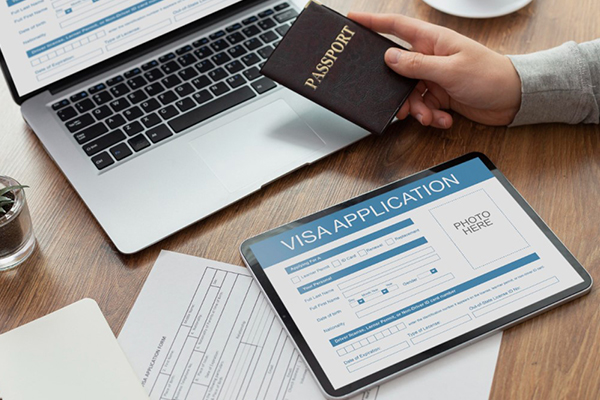
Schengen Visa Application Form: Completely filled out and signed.
-
Recent Passport-sized Photographs: Adhering to ICAO standards (e.g., clear, 70-80% face cover, ear and forehead visible, white background, taken within the last six months).
-
Travel Medical Insurance: Valid for the entire Schengen area and duration of stay, with a minimum coverage of €30,000 for medical emergencies, hospitalization, and repatriation.
-
Proof of Accommodation: Hotel reservations, rental agreements, or a letter of invitation from a host in the Schengen Area.
-
Round-trip Travel Itinerary: Flight reservations showing entry and exit from the Schengen Area.
-
Proof of Financial Means: Evidence of sufficient funds to cover your stay (e.g., bank statements, salary slips, tax returns, or a sponsorship letter with supporting documents if sponsored by another person).
-
Purpose of Travel Documentation: Depending on your purpose (tourism, business, visiting family/friends, study, medical treatment), additional documents might be required, such as invitation letters, event registrations, or enrolment proofs.
-
Visa Fee Payment: A non-refundable fee applies, with possible reductions or exemptions for certain categories (e.g., children under 6yrs and between 6-12 yrs of age).
-
Biometric Data: Fingerprints and a digital photo are usually collected at the time of application submission, unless exempt (e.g., children under 12 or if fingerprints were recently taken for a previous Schengen visa).
-
Occupation proof:
- If Employed:
– Employment Contract: A copy of your employment contract.
– Leave Sanction/No Objection Certificate (NOC) from Employer: An official letter from your employer on company letterhead, confirming your employment, position, salary, dates of approved leave for your trip, and stating that you are expected to resume duties upon your return.
– Salary Slips: Your last 3 to 6 months’ salary slips.
– Bank Statements: Personal bank statements for the last 3 to 6 months showing your salary credits and sufficient funds for your trip.
– Income Tax Returns (ITR) or Form 16: Proof of income tax returns for the last two assessment years.
- If Self-Employed or Company Owner:
– Business Registration Certificate/License: Proof of your business’s legal registration (e.g., Certificate of Proprietorship, Partnership Deed, GST Registration with annexes, or business license).
– Company Bank Statements: Business bank statements for the last 3 to 6 months.
– Personal Bank Statements: Your personal bank statements for the last 3 to 6 months.
– Income Tax Returns (ITR): Your personal and business ITRs for the last two assessment years.
– Letter from Accountant/Financial Professional: A letter confirming your financial status and ability to support yourself during your trip.
- If a student:
– Enrolment Certificate: An official letter or certificate from your educational institution confirming your enrolment, course details, and duration of study.
– No Objection Certificate (NOC) from School/University: A letter stating that the institution has no objection to your travel during your planned dates.
– Proof of Financial Support: If sponsored by parents or guardians, their sponsorship letter, bank statements, salary slips, and tax returns, along with proof of relationship (e.g., birth certificate).
– Scholarship/Grant Letter: If applicable, proof of any scholarships or educational grants.
- If Retired:
– Pension Statements: Official pension statements for the last 3 to 6 months, demonstrating a regular income source.
– Proof of Other Regular Income: If applicable, documents showing income from property ownership, investments, or other sources.
– Bank Statements: Your personal bank statements for the last 3 to 6 months.
Important Considerations:
- Originals and Copies: Be prepared to present originals of all documents for verification and submit photocopies with your application.
- Language: Ensure documents are in English or the official language of the destination country, or accompanied by a certified translation.
- Consistency: All information across your application and supporting documents should be consistent.
- Financial Sufficiency: Regardless of your occupation, demonstrate sufficient funds to cover your entire stay in the Schengen Area.
- Specific Embassy Requirements: Always check the specific requirements published by the embassy or consulate of the Schengen country you are applying to, as they may have additional or slightly different requirements.
Important Notes:
- Application Location: Apply at the embassy, consulate, or designated visa application center of the country where you will spend the most time. If stays are of equal length, apply at the consulate of your first point of entry.
- Timing: Submit your application at least 15 working days before your intended travel date, and no earlier than six months beforehand.
- Language: All documents must be submitted in English or the official language of the destination country, or accompanied by a certified translation.